Our Founder
Omar Alnuaimi
Founder & President, SPG76 Research Foundation · the Chicago area
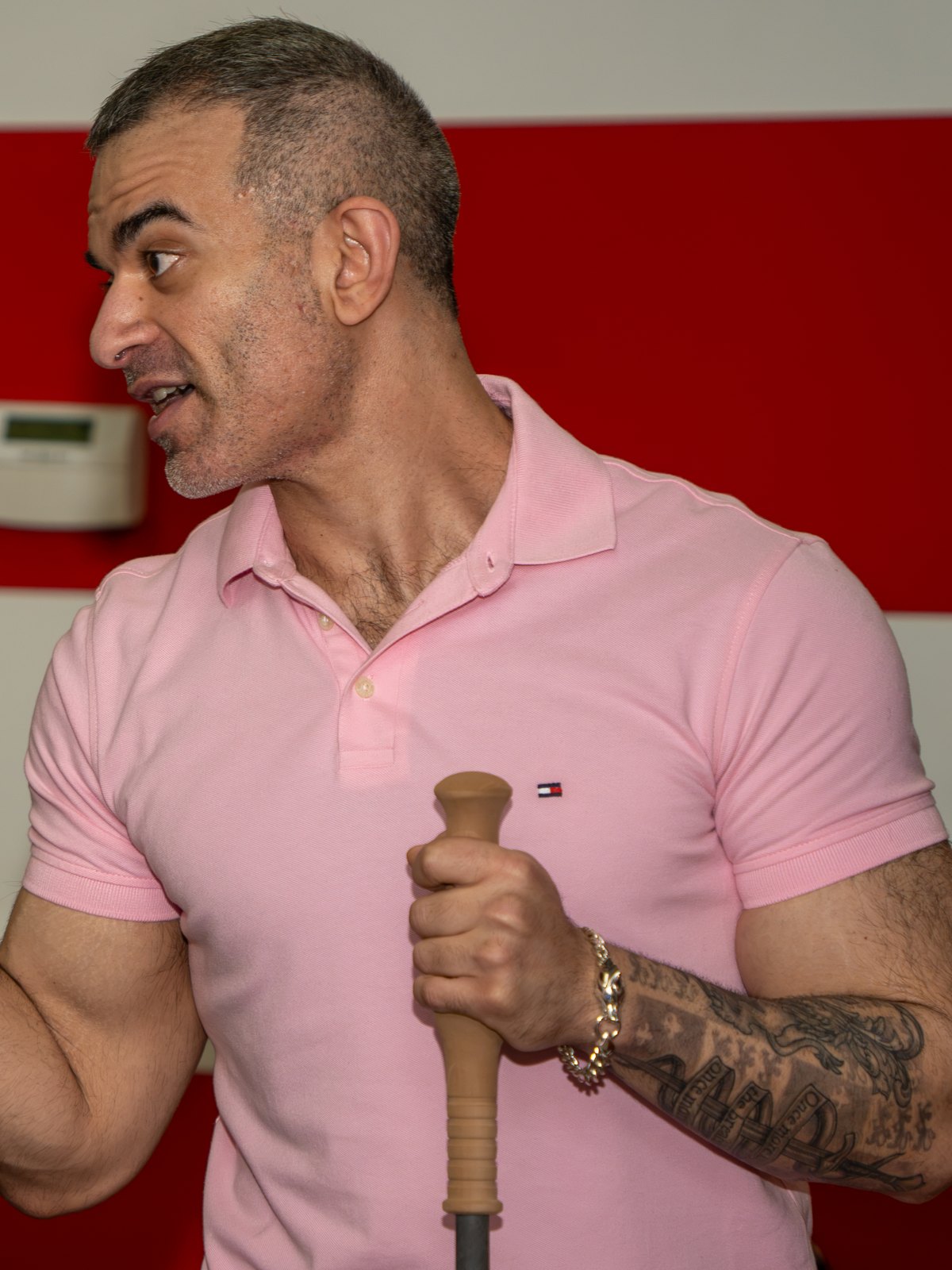
Omar Alnuaimi is the founder and president of the SPG76 Research Foundation — and a patient advocate who lives with SPG76 himself.
His symptoms began in August 2014, at age 24, with balance difficulty and trouble walking in a straight line. A clinical diagnosis of hereditary spastic paraplegia came in 2016, but his genetic test came back negative — the gene behind SPG76 had not yet been linked to the disease. It took until February 2019, after whole exome sequencing, to confirm SPG76: both copies of his CAPN1 gene carry a loss-of-function mutation. Today he walks with a cane, and the stiffness in his legs has slowly increased.
In 2026 he decided to do something about it. He reached out to the scientists who had published on SPG76 and the CAPN1 gene, and to patient organizations, clinicians and researchers on several continents. What began as individual outreach emails became a coordinated international effort. In about six months, the researchers he brought together in the United States, Canada and Brazil submitted three research funding applications for SPG76 work; the foundation and Dr. Ziv Gan-Or's team at The Neuro (McGill University) began building the first combined natural history of SPG76 with doctors around the world; and people affected by SPG76 in ten countries connected with the foundation. He incorporated the foundation in July 2026, and that September the IRS recognized it as a 501(c)(3) public charity.
He leads the foundation in two capacities at once: as its founder and president, and as a person living with the disease the research seeks to treat. The foundation works as a connector between patients, clinicians and researchers — never as a collector of medical data in its own right.
“Every treatment I receive addresses what the disease does to my body. None addresses the disease itself. When my diagnosis finally came, I learned there are approximately 100 confirmed cases worldwide, with many more suspected undiagnosed — and that a disease this rare can easily be left behind. I started this foundation so that SPG76 isn't. No one should have to navigate this alone, and no disease should go without research simply because it's rare.”
— Omar Alnuaimi
In Omar's Words
My aims
- A treatment that slows or halts SPG76 — for everyone living with it, myself included.
- No one facing SPG76 alone — find every person we can, connect them with each other, and keep them informed.
- A community that is ready — a clear picture of how SPG76 progresses, built with doctors around the world, so that if and when future studies open, people with SPG76 are known, connected and ready to take part.
- Researchers working together — keep the groups in the United States, Canada and Brazil connected, bring in others, and build work that could help the 25–30 related recessive forms of hereditary spastic paraplegia too.
The Road to a Diagnosis
Five years from first symptoms to an answer
- August 2014First symptoms — changes in gait and balance
- March 2016Clinical diagnosis of hereditary spastic paraplegia; genetic test negative (the CAPN1 link not yet discovered)
- 2016–2018A diagnostic odyssey — spinal taps, MRIs, specialist consultations
- November 2018Whole exome sequencing ordered
- February 2019SPG76 confirmed — the CAPN1 mutation identified
The SPG76 Research Foundation is a 501(c)(3) public charity (EIN 42-4119137). It is governed by a patient-led board of directors.